Julie Jonas, now a law professor at the University of St. Thomas School of Law, served as the Great North Innocence Project’s inaugural attorney and legal director for nearly two decades. Prior to officially joining the then-Innocence Project of Minnesota (IPMN), Julie partnered with the organization’s founder, Jennifer Kramer, to plan the Innocence Ball to fundraise for the fledgling organization.
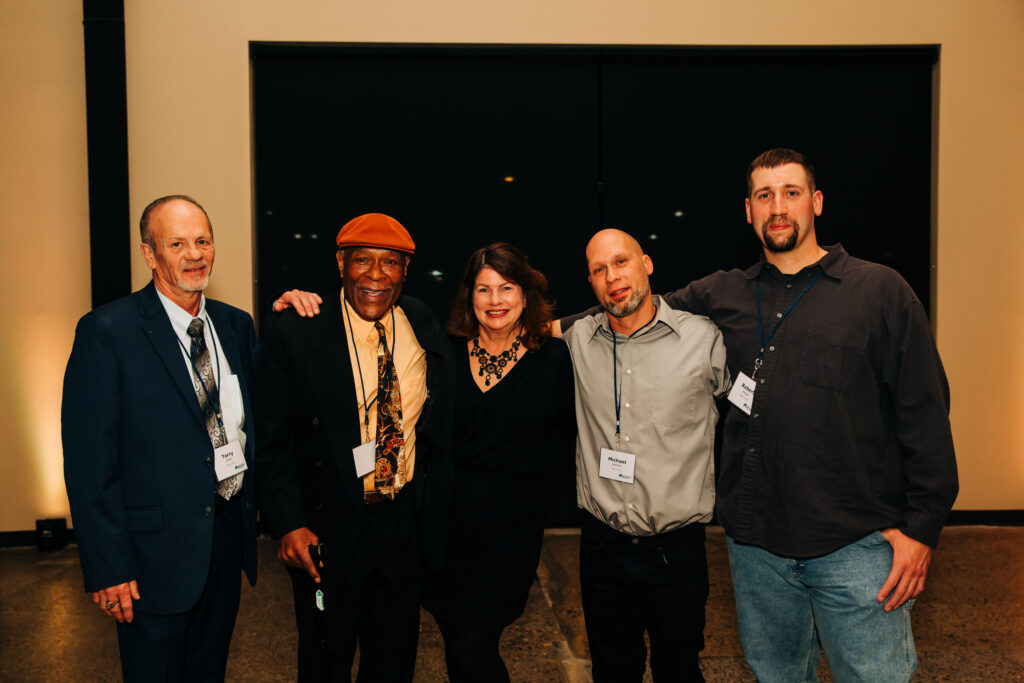
Prior to joining IPMN, Julie worked as a public defender. It was because of this work that she felt drawn to the new innocence organization’s mission, and excited about the possibilities that DNA evidence could unlock.
“I loved the idea that DNA could tell us who the actual perpetrator of a crime was. I had worked on a trial that involved some DNA evidence and had been able to see some of the science firsthand, and was hoping to use those tools at IPMN.”
The first official office of the new organization was modest. Hamline University generously donated space in a university-owned house on its campus. Julie remembers sharing an office with the first executive director, Erika Applebaum, along with another nonprofit’s staff.
“Our chairs almost touched back-to-back when we sat at our desks! I remember the window air conditioning units were so loud and the space so small that we had to turn them off when we were on the phone.”
The early days of the organization were challenging. Despite Julie’s excitement about the possibility of DNA and her confidence that wrongful convictions were occurring given her experience as a public defender, applications were slow to arrive. In addition, she missed the fast pace of being in court every day. After a couple years, Julie even contemplated leaving the organization, fearing that the organization wouldn’t have the positive impact for wrongfully convicted people that she imagined.
Then, she received a letter that changed her mind and gave her renewed purpose in her work.
Sherman Townsend had been convicted of a burglary in Southeast Minneapolis. However, there was no physical evidence linking him to the crime. The victims of the assault gave police a suspect description, which did not match Sherman’s physical appearance. The only evidence against him was a single eyewitness, a neighbor named David Jones, who claimed to have seen Sherman fleeing the crime scene.
During trial, Sherman’s defense counsel performed poorly. Sherman tried to dismiss his attorney at one point, fearing the attorney’s incompetence would cost him his freedom. The judge in Sherman’s case even had to dismiss the jury several times during trial due to address Sherman’s defense counsel’s incompetence.
Despite the weaknesses in the case and because of the poor defense presented by Sherman’s attorney, Sherman was convicted and sent to prison.
From early in the investigation Julie saw the weaknesses in Sherman’s case. She knew that his defense attorney had been suspended because of his poor practices. IPMN began investigating.
Like in many cases, even in those with major indicators of a potential wrongful conviction, it can be tremendously challenging to get back into court because of numerous procedural hurdles, and most importantly the requirement for new evidence. It was not enough that Sherman’s conviction was based on faulty evidence. But everything changed when Julie received an unexpected letter.
“I was just sitting in my office one day going through the mail and opened this letter. It was from David Jones.”
The same David Jones who testified against Sherman as the single eyewitness in his case. The same David Jones who claimed to have seen Sherman fleeing the scene of the crime.
David wrote that he had been sent to prison on an unrelated charge, and while incarcerated, he ran into Sherman. He was shocked that Sherman had been convicted. He was shocked because he knew that Sherman didn’t commit the crime.
He did.
David went on to explain to Julie that after seeing Sherman in prison and learning that Sherman had been locked up for nearly 10 years because of his testimony, he had a crisis of conscience. He was newly sober and wanted to atone for his role in sending an innocent man to prison.
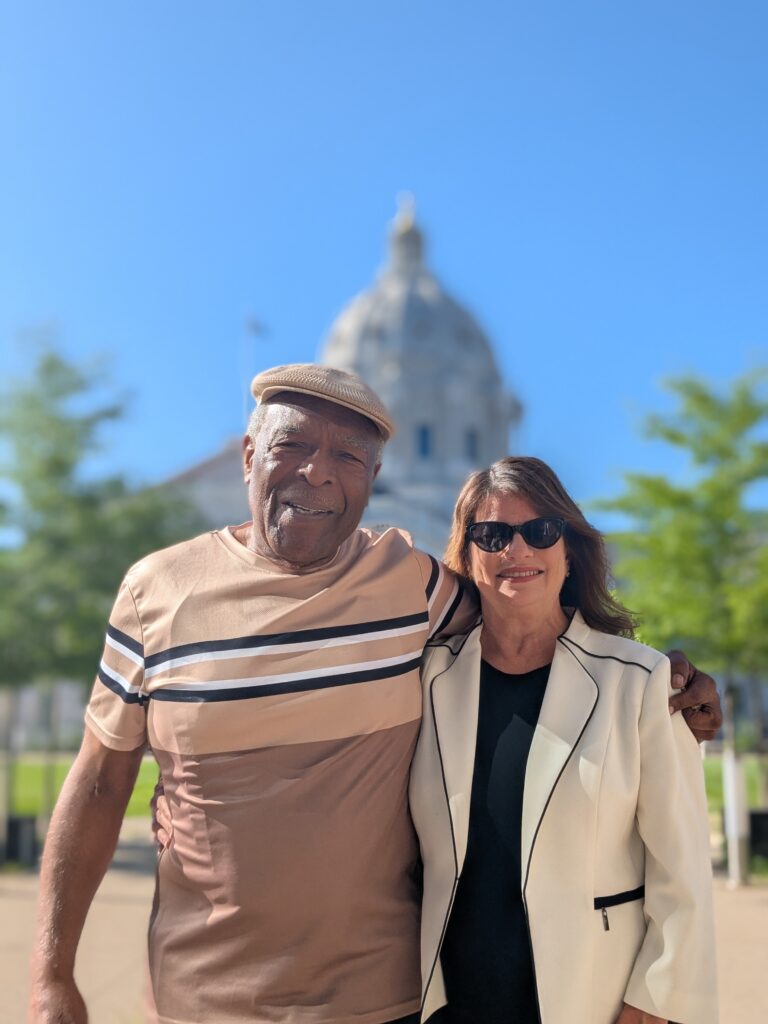
“I honestly wasn’t sure that I believed him when I first read the letter. But after I went to visit him, I was amazed. He was totally forthright. He answered every question I asked thoroughly and even shared additional facts that reflected poorly on him. I completely believe he was telling the truth after speaking to him in person.”
Julie would go on to interview David at length two more times, and David would eventually draw a detailed map of the crime scene, including how he entered and left the scene of the break in. Everything lined up.
Without David Jones, there was no evidence left against Sherman. In 2007, Julie and former Board Member, Michael Davis, argued Sherman’s conviction should be vacated and he should get a new trial.
While waiting for the judge’s ruling on the new trial, Hennepin County prosecutor Mike Freeman offered Sherman a deal: he could be released immediately, with the conviction still on his record or he could wait for the judge’s ruling. Regardless of the judge’s ruling, the prosecutor planned to appeal, so Sherman would continue to stay behind bars. With his ill and elderly mother hoping to spend time with him, Sherman took the deal and left prison on October 2, 2007. His mother died four months later.
GNIP, along with pro bono partners from Maslon LLP, would continue the fight to clear Sherman’s name. The Minnesota Board of Pardons eventually granted Sherman an innocence-based pardon in 2025, fully exonerating him.
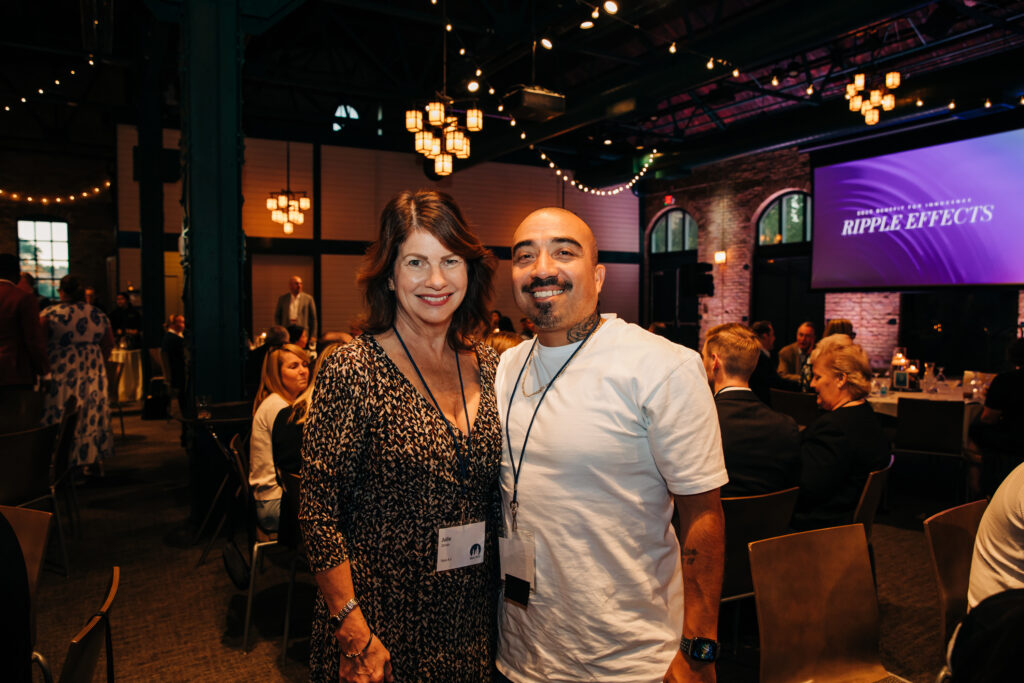
As of this writing, GNIP has successfully freed 15 wrongfully convicted people. Julie worked on many of these cases. Even after departing the organization to become a professor in 2022, Julie consulted on other cases for GNIP. She also continued to represent Thomas Rhodes and Edgar Barrientos-Quintana on a pro bono basis until they were released from prison.
Sherman’s case marked a turning point for Julie and the organization. IPMN had proof of concept. And the momentum began. Not long after Sherman came the cases of Koua Fong Lee, Michael Hansen, Richard LaFuente, and Terry Olson. All wrongfully convicted, and all freed in no small part because of Julie’s representation.
What does Julie wish to see in the future for GNIP?
“Well, I would love it if GNIP wasn’t needed anymore. I don’t think that’s going to happen anytime soon. But that’s the goal.”
Responses