Defining the problem
Eyewitness misidentification occurs when a witness incorrectly identifies someone as the perpetrator of a crime. Eyewitness misidentification is the single greatest cause of wrongful conviction in the United States.
Despite its widespread use and the significant weight it carries in court proceedings, eyewitness testimony has been shown to be highly unreliable. Memory is malleable, susceptible to suggestion, and can be dramatically influenced by stress, trauma, and the passage of time.
Nationally, 69% of exonerations—252 out of 367 cases—have involved eyewitness misidentification. The National Registry of Exonerations has identified at least 450 non-DNA-based exonerations involving eyewitness misidentification.
Memory operates in three stages—encoding, storage, and retrieval—and can be compromised at each point:
- Encoding Limitations:
- Weapons Focus Effect: In cases involving a weapon, attention is diverted to the weapon rather than to the perpetrator’s face.
- Stress and Trauma: High-stress situations impair memory formation.
- Cross-Racial Effect: People have more difficulty properly identifying individuals of races different from their own. A similar effect applies to people of different ages.
- Duration of Exposure: Brief glimpses at the perpetrator lead to less reliable witness identifications.
- Storage Limitations:
- Memory Decay: Details of an encounter fade over time.
- Post-Event Information: Memories can be altered by information received after the viewing.
- Retrieval Issues
- Suggestive Questioning: Leading questions can implant false details, causing witnesses to change their account of an incident.
- Lineup Procedures: Suggestive procedures during eyewitness identifications conducted by law enforcement can increase the chances of a misidentification.
- Confirmation Bias: Once a witness has identified an individual, that witness may get more confident with their selection over time, particularly if criminal charges are later brought forth.
- Pressure to Identify: Witnesses may experience pressure to identify an individual.
How can we prevent eyewitness misidentification?
In the 2020 legislative session, Minnesota passed a law advocated for by the Great North Innocence Project that requires all law enforcement agencies in the state to follow mandated best practices consistent with those recommended by the National Academy of Science.
Scholars have demonstrated that using these best practices mitigate the risk of eyewitness misidentification:
Beyond the best practices approach implemented in Minnesota, other improvements to eyewitness identification procedures include:
- Requiring a recording of the entire identification procedure
- Using sequential (one-at-a-time) rather than simultaneous (all-at-once) lineups
- Allowing expert testimony on eyewitness reliability during trial
- Developing better jury instructions on evaluating eyewitness testimony
- Requiring corroborating evidence for convictions based primarily on eyewitness testimony
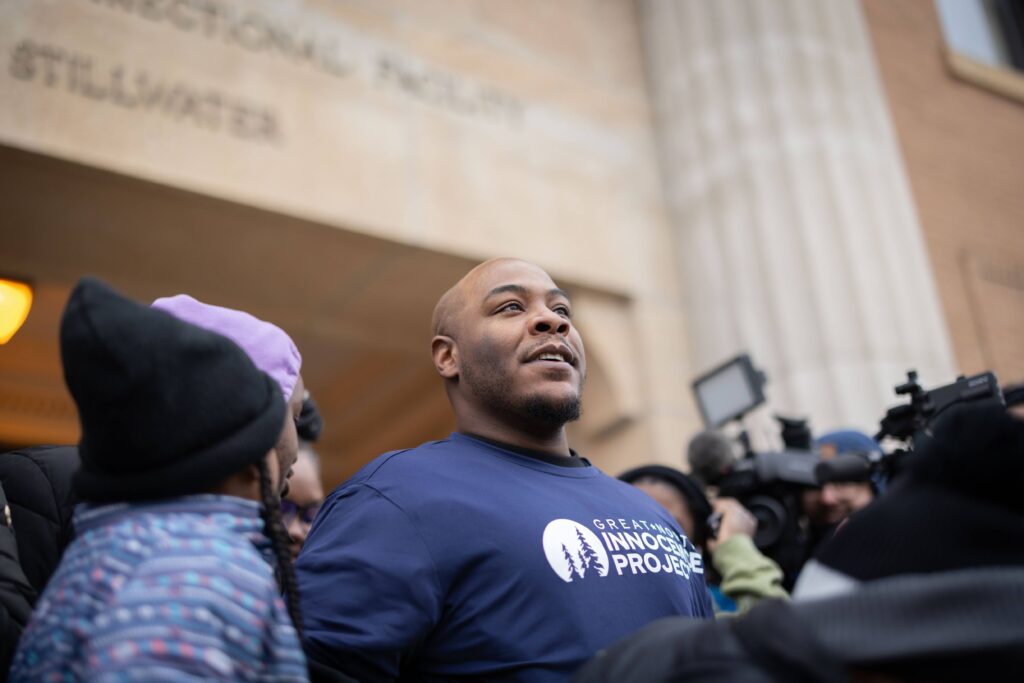
Case Example: Marvin Haynes
Marvin Haynes was 17 years old when he was convicted of murder and sentenced to life in prison based largely on flawed eyewitness identifications. After spending nearly two decades behind bars, he was exonerated when evidence showed significant flaws in the identification procedures used in his case.
The identification procedure employed by investigators went against internal protocol and were inconsistent with best practices. The lineups were conducted by officers familiar with the case, the witnesses initially expressed uncertainty but was bolstered by feedback, and there was no physical evidence connecting Marvin to the crime. Marvin’s case is a stark reminder of how procedural flaws can interact with cognitive biases to lead to a wrongful conviction.