Erika Applebaum Zemby, Practice Manager at Wigren Forensic, was the first-ever executive director of the Innocence Project of Minnesota (now Great North Innocence Project). During her tenure as the organization’s leader, Erika built the operational infrastructure and financial health of the organization, enabling it to grow into a fully functioning legal justice nonprofit.
Erika recalls first hearing about the job opening, and being excited about what she could contribute to building the fledgling organization. Her strong background and expertise in nonprofit management, operations, and finance made her the perfect match. The hiring committee agreed. And, just three days after starting the job, she flew to San Diego to attend the second-ever conference focused on innocence work.
“That first year when I went, there were maybe 50 or so people there. My main goal in attending was to see what people were doing from an operational standpoint. How were they process applicant letters, how were they tracking all of this information, how were they conducting outreach to incarcerated people? We needed the nuts and bolts.”
Equipped with the knowledge gathered at the conference, Erika got to work to build the organization’s systems. She was particularly excited about working with a diverse, knowledgeable Board of Directors.
“The Board did a good job. Jennifer Kramer (one of GNIP’s founders) put together a group of people who might not normally be on the same Board, but it didn’t feel adversarial. We focused on building the Board’s diversity, including diversity of backgrounds and professions.”
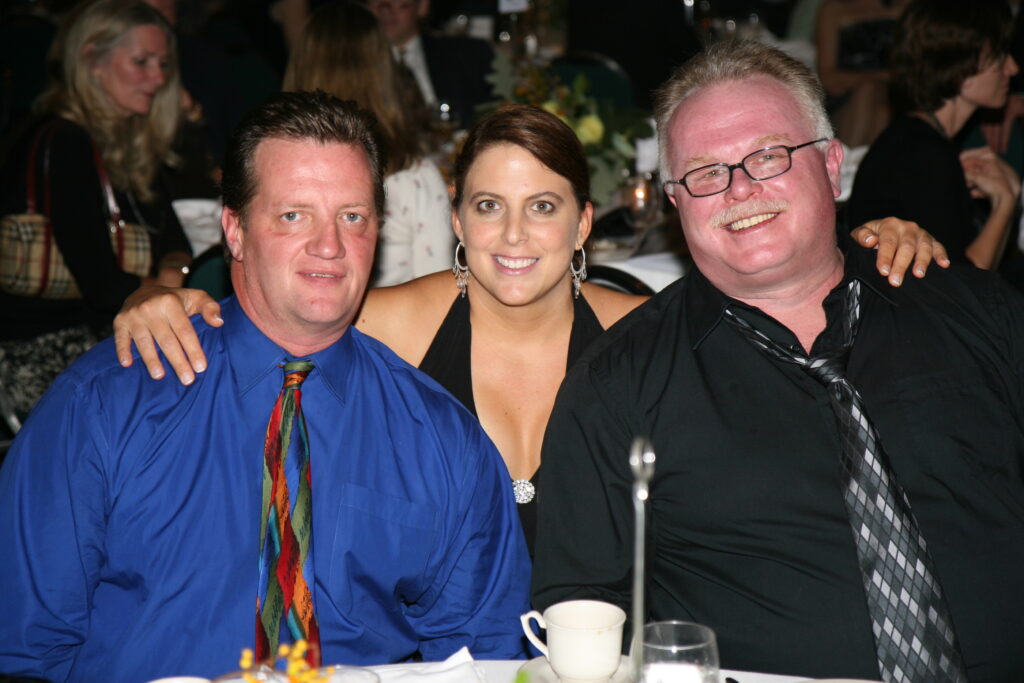
Erika remembered that IPMN was a leader in including forensics experts on the Board, and noted that this would later contribute to IPMN/GNIP’s unique expertise in innocence cases related to complex medical deaths.
Building a nonprofit from the ground up is not without its challenges. Finding reliable and consistent funding, office space, and capacity building were top of Erika’s list. The early Innocence Balls were critical fundraising opportunities that helped to sustain the organization as it defined its core programming. Hamline University and founding Board member Ed Butterfoss provided office space for the nonprofit organization. With these key components in place, the organization began to lean into one of its core tenants, public education towards preventing wrongful convictions.
“We started teaching a wrongful convictions course at Hamline, and eventually added a clinic. From there we expanded to have other wrongful convictions courses at other law schools. We would also go speak to forensic science programs and talk about the intersection between their discipline and wrongful convictions work.”
Erika was also a pioneer in establishing the Innocence Network. She was a founding Board Member and sat on the Board for about eight years. She recalls the momentum that was built by convening innocence organizations from around the country, and how innocence organizations began to consider providing support for clients after coming home.
“That was a great experience. We initially just started talking about getting people out of prison; we hadn’t thought about what happens to those people afterwards. But then there were all these issues that came up after someone came home. We didn’t have the wraparound supports. But eventually, that changed. Now there are social workers and others who started doing this work and incorporating this at the Innocence Network Conference.”
Erika also highlighted that this group was critical in encouraging innocence organizations to focus on preventing wrongful convictions not just through education, but also through legislation.
“In our discussions, we started to see the same common causes of wrongful convictions. And so we started to talk about changing the system to prevent wrongful convictions. And that’s when we (IPMN) started speaking with legislators and prosecutors about these issues. We eventually were one of the first states to pass eyewitness identification reform legislation.”
Since this success, GNIP has passed five additional pieces of legislation towards preventing wrongful convictions and supporting exonerees.
Despite the intense challenge of this work, Erika was encouraged and inspired by GNIP’s clients. She especially remembers Sherman Townsend, GNIP’s first-ever freed client, with warmth.
“He has the most amazing smile. Just a very kind and wonderful soul.”
Erika still believes that innocence work has a place in our current criminal legal system. But she hopes that’s not always the case.
“I hope that in the future, we will have all the protections in place so that wrongful convictions don’t exist. That would be the goal, that there would be no such thing as the innocence movement.”
Responses