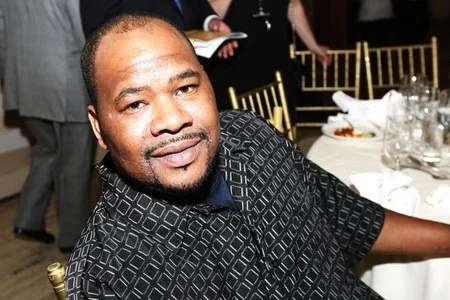
When Kennedy Brewer walked out of prison in 2007, exonerated with DNA from killing his girlfriend’s three-year-old daughter, he had spent over a third of his life in prison based wholly on two opinions. The medical examiner believed he found bite marks on the child’s body, and a forensic odontologist stated the marks, without a doubt, were made by Brewer. Both opinions were false, but the presentation of this evidence as infallible led a jury to convict Brewer for a crime he did not commit. Brewer was sentenced to death and spent 15 years behind bars before being exonerated. Despite repeatedly being discredited, bite mark analysis continues to be accepted in American courts today.
First used in 1954, bite mark analysis appeared in Texas courts when investigators matched a bitten piece of food to a suspect. The defense did not dispute this new, unproven methodology which set the stage for the use of bite mark analysis in U.S. courts. The pseudo-science was popularized when prosecutors used it to help convict serial killer Ted Bundy in 1979, cementing the idea that bite mark analysis is a credible science.
The methodology relies on two assumptions: humans have unique bite patterns, and human skin is able to preserve these unique bite marks for comparison, neither of which have been scientifically proven. Human bodies start to heal immediately, so there is no guarantee bite marks can be preserved. Bite marks left by any teeth can look similar, especially if the marks have begun to heal. Additionally, bite marks are evaluated through “direct comparison” meaning a person looks at the two bite marks and gives their opinion about whether they match or not. There is no standard for matching, so comparisons are completely subjective. In 2009, the National Academy of Sciences published a study discrediting bite mark analysis writing that this ‘evidence’ has no “meaningful scientific validation, determination of error rates, or reliability testing.” A study done by the American Board of Forensic Odontology found that bite mark analysis had a 63.5% rate of false identifications.
In 2016, Texas courts put a moratorium on the use of bite mark analysis in court proceedings, stating that “the body of scientific knowledge underlying the field of bite mark comparisons evolved in a way that discredits almost all the probabilistic bite mark evidence at trial.” Some odontologists such as Prof. Mary Bush of the University of Buffalo, are performing studies to define scientific reliability standards and determine how forensic odontology can meet them so the analysis can be used responsibly in courtrooms. Still, Texas is an anomaly, and in every other state, the acceptance of bite mark analysis in criminal trials is left to the discretion of a judge.
Even with broad scientific agreement that bite mark analysis is unreliable, some forensic odontologists still assert the credibility of bite mark evidence in court. The forensic odontologist who helped convict Kennedy Brewer, Michael West, stated the bite marks on the victim were “indeed and without a doubt inflected [sic] by Kennedy Brewer.” Upon reinspection, the marks were deemed to be fish bites the victim sustained while in the creek where she was found. Michael West has consulted on over 300 bite mark analysis cases. In a book written about Brewer’s case, The Cadaver King and the Country Dentist, the author writes, “We may never know the extent of the damage [Michael West] may have done.”
Responses