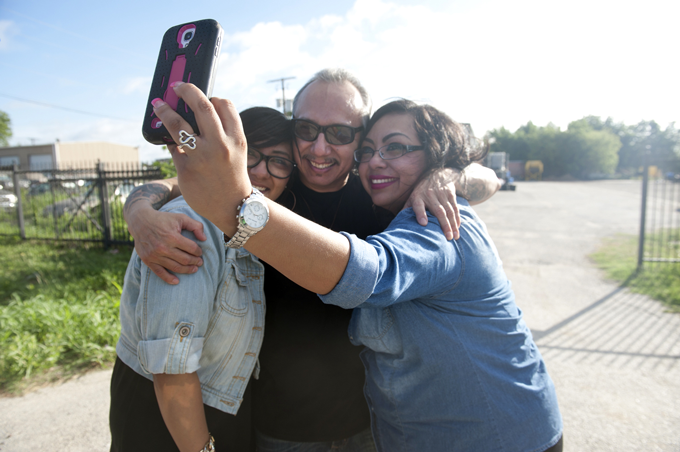
In 2014, Richard LaFuente left prison early after serving 28 years for a crime both he and the victim’s family continually insisted he did not commit.
A suspicious death and an unprecedented murder trial
In August 1983, the body of Eddie Peltier, a former Spirit Lake police officer, was found on the side of the highway on the Spirit Lake Dakota Reservation in North Dakota. Peltier was an enrolled tribal citizen. Initially, police treated the death as a hit and run. However, two years later, they reopened the investigation, and by 1986, the biggest murder trial in North Dakota’s history was underway.
Richard LaFuente was 25 years old when he visited the Spirit Lake Dakota Reservation in the summer of 1983, traveling from his home in Texas at the urging of his step-sister, who said he needed to sign paperwork to inherit money his mother had left him. He brought his cousin, John Perez, along for the trip. Richard was of mixed Mexican-American and Dakota heritage and not very familiar with the reservation. Though he is a citizen of the Spirit Lake Nation, he had only visited once or twice. After spending a few weeks visiting and meeting relatives, Richard went back home to his wife and two young daughters in Texas.
Then, in January 1986, a federal agent arrived in Texas with a warrant for Richard’s arrest for the murder of Eddie Peltier. Ten other Native American men were also charged for the murder of Peltier, including Richard’s cousin John. All eleven men adamantly maintained their innocence and each refused to incriminate any of the other men.
A Bureau of Indian Affairs police officer, James Yankton, was credited for breaking the case two years after Peltier’s death, bringing forward four witnesses who said they had seen a drunken party at which the eleven indicted men and Peltier were present. The men were accused of chasing Peltier out of the party and beating him on the highway. The witnesses claimed that Richard then drove over Peltier’s body.
In May 1986, all eleven men were tried together in the biggest murder trial in North Dakota’s history, with the largest number of defendants ever to stand for trial. Charges ranged from first-degree murder, to assault, to witness tampering, to second-degree murder. The defendants repeatedly told the court that trying them together in one trial violated their rights, but the trial continued.
Two men testified on Richard’s behalf, stating that Richard could not have been at the party because he was with them and had slept at their home that night. Richard also produced telephone records showing he had called his wife from that home during the time it was claimed that he was in a different home at a party with Eddie and the ten other men.
All eleven defendants were found guilty despite no evidence tying them to the crime other than the four witness statements, which conflicted greatly from each other. Ten men were found guilty of murder, including Richard and his cousin. Richard was given the longest sentence – life in prison.
Serious issues emerge
All eleven defendants jointly appealed their convictions on numerous grounds, including that there was insufficient evidence against them and that their trials never should have been joined into one. The appellate court agreed that the trials should not have been joined into one, and vacated convictions against nine of the men, saying there was not enough evidence against them. But, the court did not dismiss the murder convictions against Richard and his cousin.
In 1994, two of the four witnesses recanted their testimony at a hearing, disclosing that they had been threatened into making statements by James Yankton, the Bureau of Indian Affairs police officer who was credited with solving the case. Evidence also showed that key witnesses were paid thousands of dollars by the government.
The owner of the house where the party allegedly occurred testified that there was no party that night and that she refused to allow alcohol at her home, a fact attested to by many in the community.
Two new witnesses then came forward saying they heard Yankton’s brother and sister drunkenly admit to killing Peltier. The brother is alleged to have said, “I killed Eddie Peltier and I’m not afraid to kill again,” while the sister allegedly said, “I didn’t mean to hit him over the head.”
After hearing the multiple recantations of its witnesses, the government offered Richard and his cousin a deal; if they admitted their guilt, they could go free. Neither would accept the deal because they were innocent.
Richard fought to leave prison and won motions for a new trial twice, but the decisions were later overturned. Several judges agreed that the prosecutors acted coercively by charging the key witnesses with perjury, then dropping the charges only after the witness testified for the prosecution. At one point a judge admitted that the government had created “a climate of coercion and fear” through its actions towards the witnesses. But Richard was still not able to get a new trial.
Standing on principle and the victim’s family standing with him
Richard began a long series of appearances before the parole board. Each time the parole board encouraged him to admit to the crime so that they could consider releasing him. Each time he refused to say he had remorse for committing Peltier’s murder saying, “I won’t ask forgiveness for something I didn’t do.”
Because he refused to show remorse for the crime, parole was denied repeatedly, six times over two decades.
The Peltier family believed that Richard was innocent and attended parole board hearings for more than a decade, saying that he was innocent and should be released. Peltier’s mom, Gladys, wrote and videotaped pleas for his release, and stated, “Definitely I want him free.” Peltier’s sister, Andrea, repeatedly spoke at the parole board hearings and also fundraised for a documentary to be made about Richard’s innocence. Andrea stated, “I want to get Richard out of prison. He didn’t do it. He had nothing to do with it.”
Julie Jonas, the GNIP attorney who represented Richard, explained the principled stance Richard was taking to The New York Times, saying, “I don’t think I have met one [person] who would turn down a deal to get out of prison after eight years in a federal penitentiary, much less one who would continue to deny his guilt even though it meant his parole would be denied after serving 25 years in prison. The system keeps asking him to apologize for something he did not do, and his conscience won’t let him do that.”
Freedom
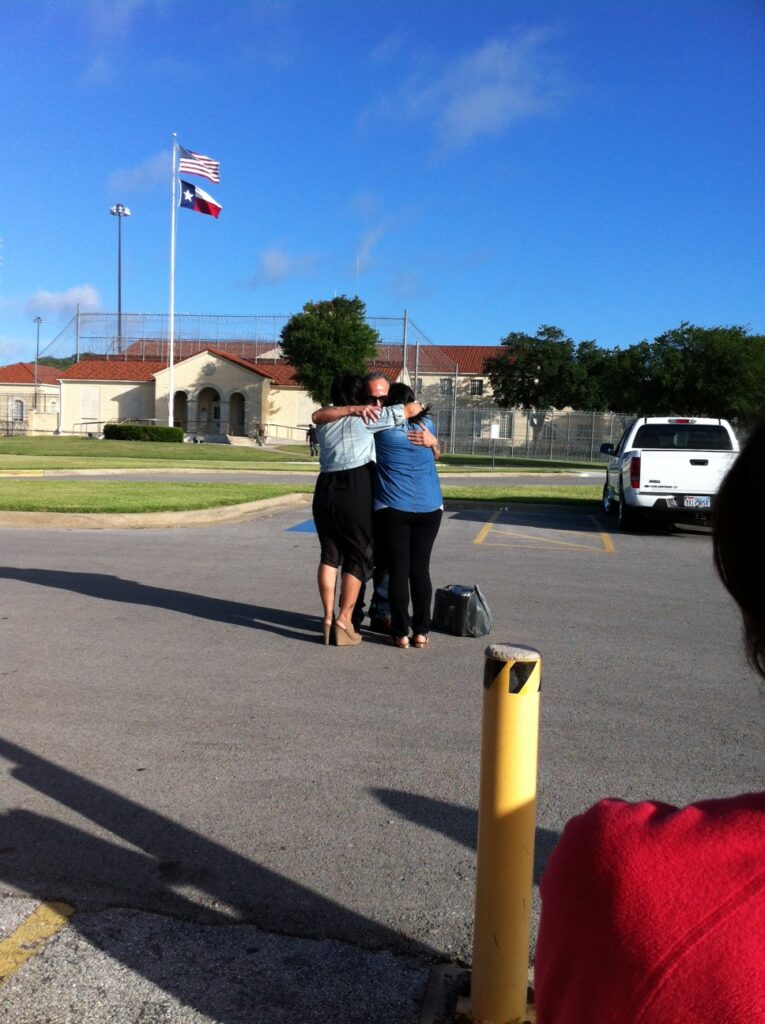
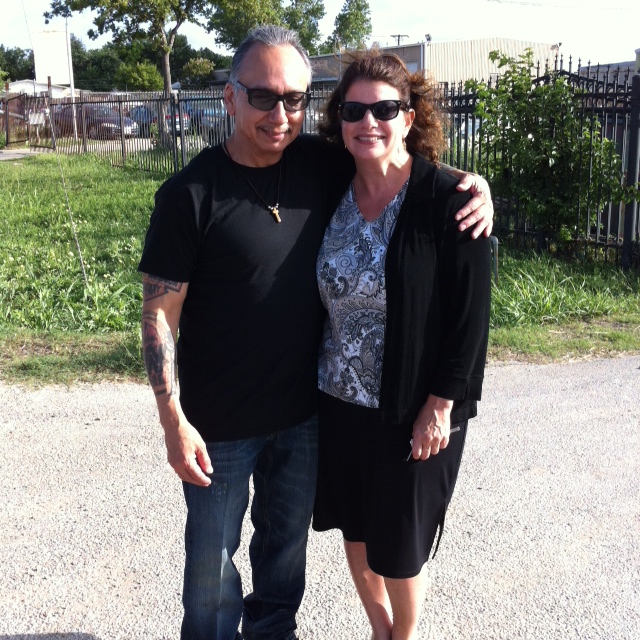
The Great North Innocence Project (then called the Innocence Project of Minnesota) began representing Richard in 2003, and appealed the denial of his parole three times over a ten-year period, showing that his behavior in prison was exemplary and seeking his release.
In 2013, the parole commission denied Richard’s parole again, then suddenly reversed their decision in 2014 when GNIP appealed for the third time. The parole board cited Richard’s “superior program achievement” and set a date for his release.
Richard was released from prison in June of 2014. His family, including his two grown daughters, greeted him at the prison, and his extended family celebrated soon after.
Peltier’s sister was also thrilled at his release saying, “I feel so good. I know he’s innocent and I know who killed my brother.”
News Coverage
- Richard LaFuente is finally free! | Texas Monthly | June 9, 2014
- Man convicted in 1983 assault and murder of former Devils Lake police officer leaves prison | InForum | June 5, 2014
- Spirit Lake Nation man free after 28 years in prison for murder | Indianz.com | June 5, 2014
- A steadfast denial of guilty, backed by victim’s kin | The New York Times | November 10, 2012